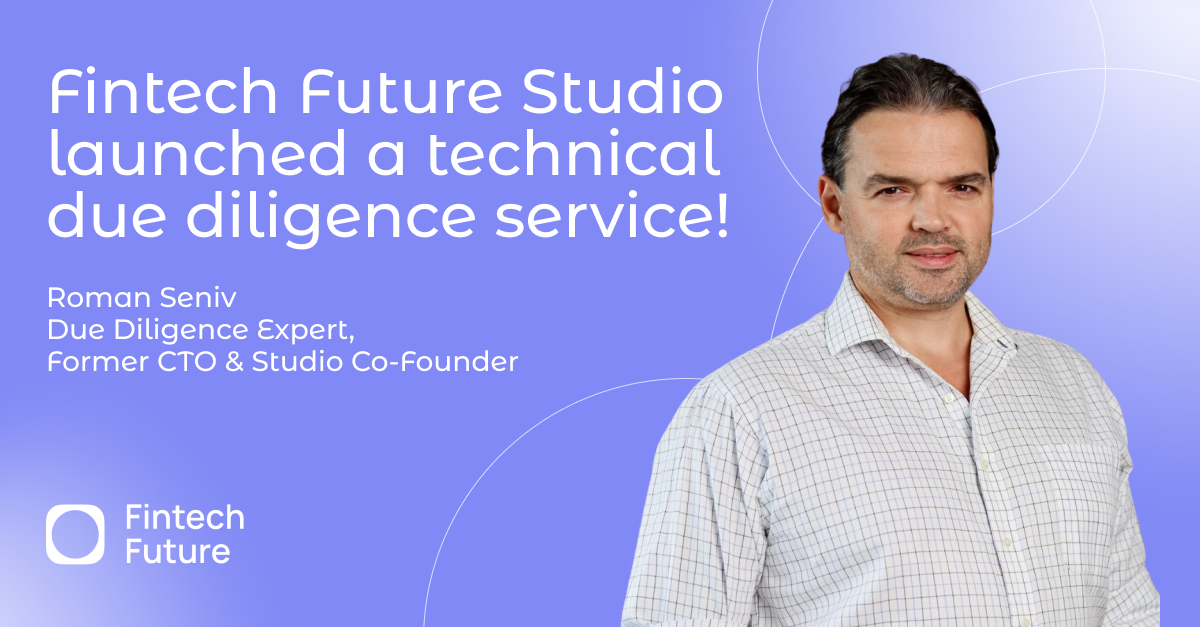
Fintech Future Studio launched a new service – Zero-Tolerance Technical Due Diligence!
Artificial intelligence allows software to be created faster than ever. But it also allows “technical bankruptcy” to be masked as a working product. We are ready to help investors distinguish an asset from a liability before the check is signed.
Today, founders often use AI tools (Cursor, Copilot) to speed up development. This is great for a prototype, but it is a trap for scaling. This phenomenon is called “Vibe Coding.” It works like a Technical Credit Card with massive interest rates.
- On the outside, the product looks ready.
- On the inside, it is fragile code without architecture.
- You as an investor start paying “debt interest” immediately after closing the deal: when the system crashes under load and developers cannot add new features.
We are launching a new service from the studio — Technical Due Diligence — to calculate the amount of this debt before the deal closes.
We don’t send juniors with checklists. The Due Diligence will be conducted by Roman Seniv, CEO & Co-Founder, ex-CTO with 20 years of experience in fields where a mistake costs too much: LifeSafety – where a bug in the code can cost a life and High-Frequency Fintech – where an error costs a license and six-figure fines.
“I went through the collapse of ABLV Bank and know from personal experience what Vendor Lock and critical dependencies are. I know how a business can disappear overnight due to risks that aren’t visible in financial reports.
My superpower is Experience-Based Pattern Recognition. I don’t need weeks to understand if a technical team is bluffing.
Most auditors check code syntax. I check engineering culture. AI is a powerful engine, but many teams are duct-taping this engine to a horse’s legs instead of building a carriage.
I look for the gap between business ambitions and technical reality:
-
Alignment Check: Do the development processes match your scaling plans?
-
True Bus Factor: If the Lead Developer quits tomorrow, will they take the entire context with them? (We audit the transferability of knowledge, not just the people).
-
Legal Awareness: Does the CTO understand the legal implications of using Open Source and AI-generated code?”
What’s included in Tech Due Diligence?
The “Red Flag” Scan
Best for: Pre-LOI Screening | Turnaround: 48 Hours
This is a “Kill Switch” for bad deals. A quick check to avoid wasting time on duds.
- Code Provenance Assessment: Is this real engineering or “Vibe Coding”?
- The Alignment Interview: A 60-minute “interrogation” of the technical leader.
- Verdict: A clear Green / Red Light report.
Investment: $3,000 (Fixed Fee)
The Technical Reality Audit
Best for: Pre-Closing / Confirmatory | Turnaround: 2 Weeks
A deep audit to calculate the “cost of ownership.”
- Architecture & Scalability: How much will it cost to build the “carriage” for your “engine”?
- Knowledge Silos & Bus Factor: Identifying critical dependencies on individuals.
- High-Assurance Security Review: Fintech/Banking level audit.
- Estimated Remediation Range: An estimated budget to fix critical debts in the first 6 months.
Investment: $15,000 (Fixed Fee)
Don’t rely on luck. Check what is actually under the hood of your future investment. Write to contact@fintechfuture.studio to discuss your deal.